Look Up, Then Plan: Making the Shop Ceiling Do Some Real Work
Photo: Basher Eyre , CC BY-SA 2.0, via Wikimedia Commons
Walk into most independent shops and your eyes go straight to the shelves, the counter or the window. That is exactly what should happen. But while everyone is looking at the merchandise, the ceiling is quietly doing nothing — or, worse, doing damage. A yellowed tile grid, a tangle of cable, a lonely strip light and a smoke detector can make a carefully curated shop feel like a storage unit with better shelving.
The ceiling is not just a lid. It is a surface, a service zone and a acoustic tool. Treat it with a bit of intent and you can change how a shop feels without adding a single square metre to the floor plan. The trick is to work in tiers: quick wins first, then modest interventions, then bigger moves if the budget and the building allow.
Start with a five-minute ceiling audit
Before you buy anything, stand at the door and look up. Then walk the shop and look up again from the back. Note what is fixed and what is merely stuck on. Lights, alarms, sprinklers, heating units, ventilation grilles, CCTV and speakers all need to stay accessible. If you are renting, dig out the lease and check what you are allowed to alter. If the building is old or listed, stop and check before you touch anything.
This audit is not admin for its own sake. It stops you covering a sprinkler head with a display grid or painting over a vent that keeps the shop from steaming up. It also shows you where the ceiling is genuinely ugly and where it is just unloved. Those are different problems.
The zero-budget reset
Start with cleaning and clearing. Remove old posters, dangling price tags, abandoned hooks and cable clips that no longer hold anything. Dust the tops of light fittings, because a grey film on a white ceiling makes the whole room feel tired. If there is a suspended grid, check that the tiles sit flush and replace any that are stained or sagging. If you cannot match the tiles, a coat of ceiling paint on the whole grid can make mismatched patches less obvious.
Then sort the cables. A loose cable drooping across a ceiling is the shop equivalent of an untucked shirt. It makes everything else look scruffy. Use cable ties, adhesive clips or a short length of trunking to run cables neatly along existing routes. Do not bury them under insulation or trap them against hot light fittings. If you are not sure what a cable does, label it rather than moving it.
Tier one: paint, panels and a bit of discipline
Paint is the most affordable ceiling treatment in most shops. A fresh coat of matt white or off-white reflects light and makes low ceilings feel less heavy. In a food shop, workshop or anywhere with grease and steam, choose a washable ceiling paint and accept that it will need redoing sooner. If the ceiling is high and the shop is open, get a decorator in rather than attempting a wobbly tower scaffold on a Sunday.
For rented units, keep it reversible. Paint is usually fine if you use a standard colour and do not paint over services, but check first. Avoid fixing heavy panels directly into a ceiling you do not own unless you have permission. Lightweight, removable options are your friends: a simple painted hardboard panel behind a till area, for example, or a slim batten framework that can be taken down at the end of the lease.
If the ceiling is structurally sound but visually busy, consider a shallow perimeter bulkhead or a simple painted border to frame the shop. It draws the eye along the edges and makes the middle feel more generous. It also hides a multitude of sins where the wall meets the ceiling.
Tier two: grids, tracks and acoustic baffles
A suspended display grid can turn dead overhead space into useful merchandising. Hanging rails, lightweight signs and seasonal decorations can all live up there, but the key word is lightweight. Check the load rating of the grid and the fixings, and never hang anything from a ceiling tile alone. If you are not confident, get a fitter to specify it. A grid that is properly installed looks purposeful; one that sags looks like a mistake.
Acoustic baffles are worth considering if your shop has hard floors, bare walls and a echo that makes conversation hard. They are not just for offices. A few fabric-wrapped baffles can soften the clatter of a busy Saturday and make the space feel calmer. They also add a bit of visual texture overhead. Keep them away from heat sources and check fire ratings with your supplier.
This is also the moment to coordinate lighting. If you are adding a grid or baffles, make sure they do not block or crowd the lights. A ceiling that is busy with fittings, cables and hanging displays can make the lighting look accidental. Draw a simple plan showing every light, every fixing and every service. It will save you a lot of squinting later.
Tier three: rafts and exposed services
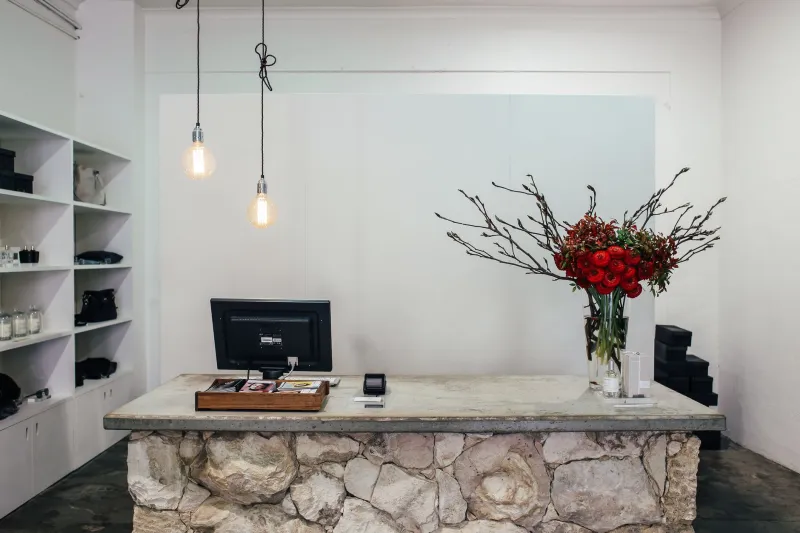
If the budget stretches further, a ceiling raft can define a zone without building walls. A floating panel above the till or the fitting area can make that part of the shop feel intentional. It can also conceal a few services and carry its own lighting. Rafts work best when they are simple and clearly deliberate. A random panel screwed to the ceiling looks like a repair.
Exposed services can be a design feature in the right building, but only if they are tidy. Painted pipework, a proper cable tray and a consistent light fitting can look industrial and honest. The same services left raw, dusty and tangled look like a fit-out that ran out of money. If you go down this route, coordinate with your heating and ventilation. Do not box in a heater or block a grille just because it looks neater.
Rented units and period buildings
In a rented unit, the best ceiling work is the work you can undo. Use removable fixings, keep a record of what you changed and get landlord approval in writing for anything structural. If the ceiling is a suspended grid, you may be able to swap tiles or add a lightweight track without touching the building fabric. If it is a lath-and-plaster ceiling in a period building, be cautious. Do not cover original features with a dropped ceiling unless you have thought about ventilation, access and consent.
Listed buildings need a slower approach. Contact the conservation officer before you fix anything to the ceiling, especially if the building has historic plasterwork, cornices or roof structure. Breathability matters in older buildings, and a sealed panel can trap moisture. The right answer may be a careful repair and a coat of breathable paint rather than a new grid.
The test before you buy
Before you spend, sketch a ceiling plan. Mark the lights, the services, the sightlines from the door and the places where you need access. Then ask three questions. Does this treatment make the shop easier to shop in? Can I maintain it without closing? And can I undo it if I move? If the answer to all three is yes, the ceiling is earning its keep. If not, it is just another surface to dust.