Lighting in Layers: Why Your Shop Looks Flat (and How to Fix It)

Photo: Ministry of Petroleum and Natural Gas, GODL-India, via Wikimedia Commons
You can spend a fortune on lovely stock, paint the walls a perfect shade of olive and still wonder why the shop feels flat. Nine times out of ten, the answer is overhead lighting. A single grid of bright ceiling panels does not flatter anything. It fills the room with even, shadowless glare and makes every product look the same. That is fine for a car park. It is not fine for a shop with character.
The fix is not necessarily a huge lighting budget. It is layering. Think of lighting in three jobs: ambient light for the room, task light for the things people need to see, and accent light for the things you want them to notice. Get those three working together and a small shop suddenly has depth, warmth and a bit of theatre.
The three layers, in plain English
Ambient lighting is the base. It stops the shop feeling gloomy and lets customers move around safely. It should be soft and reasonably even, but not so bright that it flattens everything. In a small shop, a few warm ceiling fittings or wall lights are often enough.
Task lighting is for tills, counters, fitting rooms, mirrors and anywhere a customer needs to read a label or check a colour. This is where you want decent light levels and good colour rendering. A small pendant over the counter or a strip under a shelf can do more for service than a whole ceiling of downlights.
Accent lighting is the fun layer. It picks out displays, shelves, textures and window stories. Think track spots aimed at a feature wall, a picture light over a print, or a couple of small spots picking out a new range. Accent light creates pools and shadows, and shadows are what give a shop shape.
Start with what you are actually lighting
Before you buy anything, look at your merchandise. Are you selling wool, glass, food, jewellery, books or plants? Do customers need to see true colour, or is atmosphere more important? A rail of navy coats will disappear under cool white light. A shelf of amber jars will glow under warm light. A mirror needs flattering task light, not a spotlight straight above it.
For most independent shops, warm white lamps in the 2700K to 3000K range are a safe starting point. Look for a colour rendering index of 90 or above if you can. That number tells you how faithfully the light shows colour. It matters more than raw brightness when you are selling anything where shade or texture helps the sale.
Low ceilings do not have to mean flat light
Low ceilings are common in older UK high street units, and they can make pendant lights feel like a hazard. Flush fittings, wall washers and shallow track lights are your friends. Angle spots towards walls and shelves rather than straight down. This bounces light back into the room and creates the illusion of height.
If you have shelving, consider integrated LED strips under the shelves. They light the products rather than the floor, and they make a dense display feel calm instead of cluttered. Just keep the strip hidden from direct view so customers are not squinting at a bright line.
Listed buildings and rented spaces
If you are in a listed building, do not panic and do not start drilling without advice. Listed building consent may be needed for alterations that affect the character of the building. Often there are reversible options: plug-in track lighting, clamp-on fittings, floor lamps, picture lights and battery-powered display lights. These can be removed later and usually keep everyone happier.
If you rent, check your lease before you make holes. Landlords are usually fine with sensible lighting upgrades, but they will want to know about cabling, fire safety and anything fixed to the fabric of the building. Get permission in writing and keep it simple.
Energy costs without the guesswork
LED is the obvious starting point, but do not just swap lamps and hope for the best. Check the fittings, drivers and beam angles. A narrow beam spot is great for accenting a display but terrible as ambient light. A wide flood is useful for general light but can look bland if every fitting uses one.
Put your lights on separate circuits or smart switches so you can dim or switch off the accent layer when the shop is quiet. Timers and occupancy sensors are useful for stockrooms and back-of-house areas. And if you are replacing old halogen track lights, do the maths on the whole fitting, not just the lamp.
A simple weekend upgrade plan
Start by turning everything on and taking a photograph. Then turn off the ambient layer and see what is left. You will quickly spot the dark corners, the over-lit till and the displays that have no accent light at all.
Next, buy or borrow a few warm LED spots and aim them at three things: your window display, one feature shelf and the counter. Point them at the products, not at customers' faces. Dim the ambient light slightly if you can. You will probably find that less overall light and more deliberate light makes the shop look more expensive.
The supermarket glare trap is worth naming. It happens when every square metre is lit to the same level with cool white light and no shadows. It feels efficient, but it strips the character out of the room. Independent shops win on atmosphere, so let the light have some contrast.
What good looks like
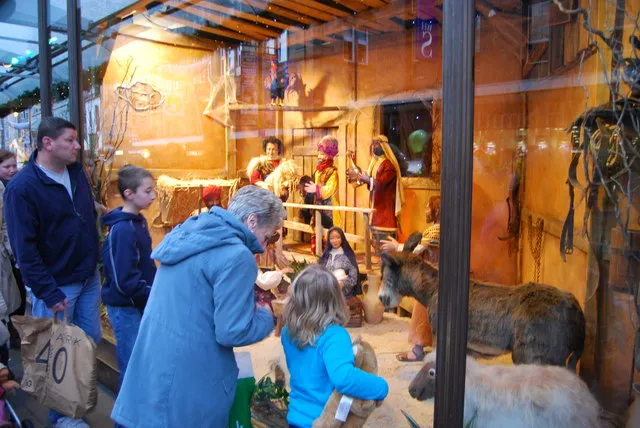
The entrance should feel bright and welcoming. The middle of the shop can have softer pools of light that guide customers from one display to the next. The till should be warm and clear. The window should have a bit of drama, with accent light doing the work rather than a blanket of brightness.
You do not need a lighting designer to get most of the way there. You need a few good fittings, a bit of aiming and the willingness to turn things down. Layer the light, and the stock will do the rest.